Atlas Alone

 All of Emma Newman’s previous books in the Planetfall series have been billed as being readable as stand-alones. The new book, Atlas Alone, may be the first to break that pattern. It is a direct sequel to After Atlas. If you are going to read it, it would be helpful to know who Carlos, Deanna and Travis are, and why they are on a starship heading after the Pathfinder. I’m going to assume that you folks know that. If you don’t, there will be spoilers.
So our heroes are safely aboard the Atlas II. Earth is a smoking ruin behind them. Most of the passengers are unaware of what happened after they left, but we know. We also know that some of the people in charge of the ship think that they have been part of the Rapture. Those sorts of people are unlikely to look kindly upon passengers who are not part of their cult. That includes our three escapees.
This book focuses on Dee. As regular Emma Newman readers will know, each of her books in the Planetfall series has a theme of mental illness. For Dee that means her unprocessed trauma from surviving London after social collapse when she was a child. It has made her self-reliant, ruthless and unable to trust others. Those characteristics happen to make her very good at immersive games – the book world technological version of LARPing, a hobby Emma is a very fond of. So when Dee is given an opportunity to play a game on an elite server available only to the upper echelons of Atlas II’s crew, she jumps at it.
As it turns out, our heroes are not the only people on Atlas II who know what happened to Earth. There is someone else as well, and he’s angry. He wants the guilty to be punished; and he wants Dee to help him. She’s unsure, but during the game she kills a non-player character, and when she emerges she discovers that a senior member of the crew has died. Somehow Dee’s mysterious contact has got her to kill on his behalf.
Pretty much all of this is in the back cover blurb, by the way.
From now on Dee is trapped. An investigation is launched. Carlos, having been a top detective back on Earth, is put in charge. Dee knows that she could be convicted of murder, but she also knows that her victim is one of the people responsible for the destruction of the Earth. Meanwhile her mysterious helper is busy trying to manipulate her into continuing to help him. He knows an awful lot about her; and is a master of psychological manipulation. Can Dee find out who he is, or help him kill the rest of the command crew, before Carlos catches her? And which should she do?
The book, then, is a psychological thriller with a badly traumatised woman as the viewpoint character. We live inside Dee’s head for the whole book; and get to feel her pain as she is ruthlessly manipulated. This is not a comfortable read, but it is a compelling one.
In happier times I would complain that the politics of Atlas Alone are simplistic and rather offensive to Americans. These days, however, we are facing what appears to be a hard-right Christian evangelist coup in the USA. I don’t suppose Emma will be the only person writing about this sort of thing. I still have reservations about the worldbuilding. I don’t believe that Europe would have been able to easily absorb the enormous number of American refugees who would want to flee the imposition of a theocratic government. But that’s not the point of the book. What we are interested in is the mental struggle that Dee is going through.
More than that I cannot say, because I absolutely do not want to spoil the ending of the book. I will be fascinated to see how other readers react to it. I also want the next book, NOW!
Yeah, it is gut-wrenching. I kind of trust Emma to do that these days. She’s very good.
But also the series has become very firmly plot-driven. The crew and passengers of the Atlas II have a number of serious issues to face. And at some point they will arrive at the colony established by the original Atlas mission. Aside from a handful of colonists stranded on Mars, these two groups are presumably the only humans left alive in the universe, so Emma doesn’t have much choice as to who and what to write about. Knowing Em, I’m sure she has it all plotted out, but it is going to be a challenge to pull off a satisfying ending.

Title: Atlas Alone
By: Emma Newman
Publisher: Gollancz
Purchase links:
Amazon UK
Amazon US
See here for information about buying books though Salon Futura

 Once upon a time…


 Having a story told by one of the protagonists from his prison cell must be this year’s thing. Marlon James does it in Black Leopard, Red Wolf. Jenn Lyons does the same thing in The Ruin of Kings. Tracker, of course, is probably lying. It is what he does. We may have a better idea of the truth of the story when we hear the testimony of other members of his band. As for the prisoner in Lyons’ book, well…

 OK, let’s get the awkward thing out of the way first. This is a fantasy novel written by a science fiction writer. That’s not to say it is a bad book. It is just that if you have certain expectations of a fantasy novel to do with it having a sense of the mysterious, the ethereal, the spiritual, then you will probably be disappointed. If instead you are happy to read a well-written book that speculates about the relationship between gods and men, you will be perfectly content with what Ann Leckie has to offer in The Raven Tower.

 Time travel is very much the thing these days, it seems. I loved Ian McDonald’s Time Was, and I recently read a very different time-crossed love story in Amal El-Mohtar & Max Gladstone’s This is How You Lose the Time War. I loved that one too. Kameron Hurley’s time travel story is a very different beast again, but also well worth reading.

 P Djèlí Clark is rapidly becoming one of my favorite writers. His The Black God’s Drums was one of the stand-out novellas of 2018. It is set in New Orleans and has airship pirates, plus nuns with guns and chemistry labs. I mean, nuns with guns is quite terrifying enough; give them chemistry labs too and there’s no telling what they might get up to.

 You probably know by now that Charlie Jane Anders’ new novel, The City in the Middle of the Night, is set on a tidally locked planet. That is, the planet always presents the same side to its sun, just as our moon does to us, resulting in one side that it always day and another that is always night. Human settlers have to reside in the equatorial zone.

 One of the things that is fashionable in the publishing industry these days is to have an “elevator pitch” for your book. This is just a couple of lines describing your idea that you can pitch in a matter of seconds, perhaps where a decision maker is in an elevator with you and can’t escape.

 Hmm, what have we here. Let’s see…

 We seem to be particularly blessed with debut novels this year (2019). I was hugely impressed with The Ruin of Kings in epic fantasy. Now it is the turn of space opera and A Memory Called Empire by Arkady Martine.

 What can you say about a new Guy Gavriel Kay novel? You read it, it is brilliant, you decide once again that Kay is a genius. Plus ça change. If you are a Kay fan then you will love A Brightness Long Ago. If you have never read him before you should probably start with Tigana or The Lions of Al Rassan. If you don’t like what Kay does, the new book will not change your mind.

 There are plenty of people out there who absolutely love Erin Morgenstern’s debut novel, The Night Circus. There are others who think it is massively over-rated. I can see where both sets of people are coming from, and indeed I vacillated between the two views rather a lot when reading the book. How can a book have that sort of effect on people? Here’s a challenge for a reviewer.

 Every so often a publisher does something that completely surprises you. Here’s a case in point. Solaris do some great books. They publish Gareth L Powell’s Ack-Ack Macaque books, and Juliet E McKenna’s latest Einarinn series. But both of these are very clearly genre novels. I did not expect them to come up with something they might want to submit to mainstream literary prizes and not feel they were wasting their time.


 This is the November 2019 issue of Salon Futura. Here are the contents.
 Editorial – November 2019
 The Ten Thousand Doors of January
 The Future of Another Timeline
 Infinite Detail
 The Rosewater Redemption
 The Deep
 Interview – Rivers Solomon
 The Exile Waiting
 Interview – Kathryn Allan
 What Can WSFS Do?
 The Forbidden Stars
 Silver in the Wood
 BristolCon 2019
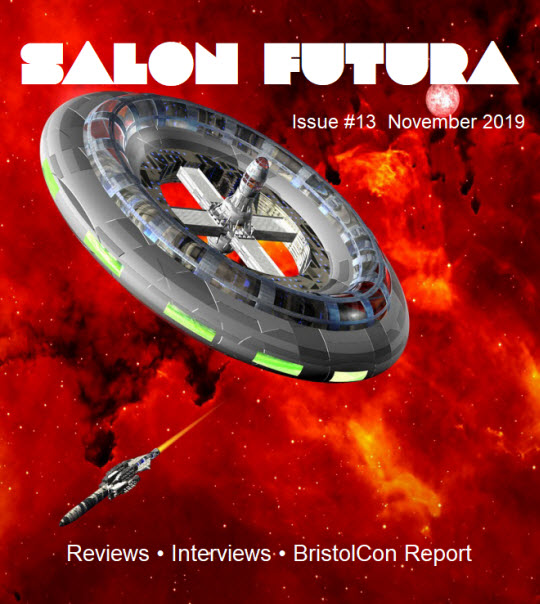 Getting artwork for a fanzine cover can be a bit challenging. I’m very much aware that artists should be paid for their work, but fanzines typically don’t bring in any money, let alone enough to pay decent usage fees. Thankfully there are people out there who put good quality art up with Creative Commons licences. This one is by Steve Bidmead and you can find the original

 Alix E Harrow is not a necromancer from the Ninth House, though she may sound like it from her name. Nor does she appear to have a thing about bones. She does, however, appear to have a thing about doors. This year she won the Short Story Hugo for something called, “A Witch’s Guide to Escape: A Practical Compendium of Portal Fantasies”. Her debut novel is called The Ten Thousand Doors of January.

 Well, here we go again, this is yet another time war story.

 One of the things I love about the current internationalisation of science fiction is the fact that we can read books by people who understand others places far better than we white Westerners do. I still love Ian McDonald’s books set in Kenya, India, Brazil and Turkey, and I think that they were a necessary step on the journey that our community has undertaken over the past couple of decades, but now we can have the real thing. We can read Silvia Morena Garcia writing about Mexico, Aliette de Bodard exploring Vietnamese culture, Tasha Shuri introducing us to India, and many fine writers from China and Nigeria. What distinguishes them all is their in-depth understanding of their settings.


 I need to start this review by saying that it will inevitably contain spoilers for Rosewater. It is pretty much impossible to talk about the new book without explaining what Rosewater is. There will also be mention of some of the major characters of the first book. So if you haven’t read Rosewater, go out and do that now. I hope you enjoy it as much as I did.


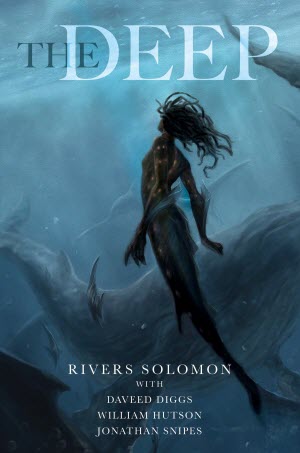 Many of you will recall that Rivers Solomon’s new novella, The Deep, is based on the Hugo-finalist clipping song of the same name. It is a story about a race of marine creatures who are descended from pregnant African women thrown overboard from slave ships. I interviewed Solomon about the book last year and have included that interview in the issue. I’m delighted to see that the book is finally out. Here’s the song as a reminder.
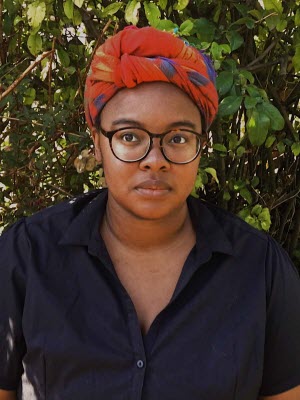 This interview with Rivers Solomon dates from August 2018. They were just heading off to San José where they were a finalist for the Astounding Award (then the Campbell). The interview is mainly about Solomon’s projected work on a book based on the clipping song, “The Deep”, which had been a Hugo finalist in Helsinki.
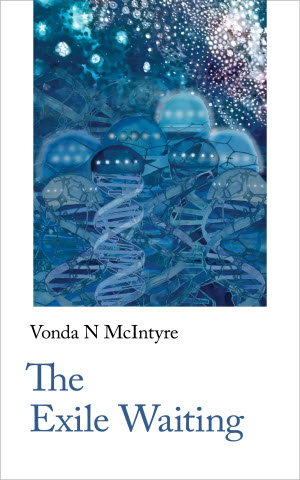 One of the themes of Analee Newitz’s
 This interview dates from August 2014, when the anthology, Accessing the Future was due out. I have reproduced it here because the themes of disability in science fiction are very relevant to Vonda McIntyre’s
 I have very much enjoyed Tim Pratt’s Books of the Axiom series. You can find my thoughts on The Wrong Stars and The Dreaming Stars

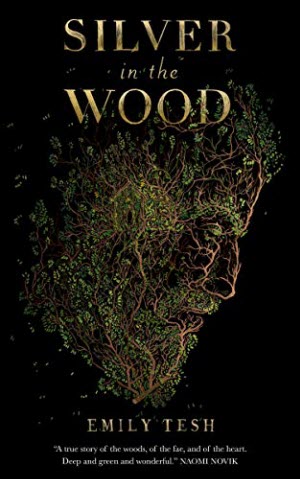 So, stories about the Green Man and dryads are a thing now? Cool!
 The people who complain that science fiction has been taken over by Social Justice Warriors often say that there is a lack of fun adventure stories. Obviously those people have not been reading Tim Pratt.


 This is the October 2019 issue of Salon Futura. Here are the contents.
 The Warrior Moon
 Interview – Ellen Datlow
 FranKissStein
 The Pleasant Profession of Robert A Heinlein
 Feeling Badgered?
 Alice Payne Arrives
 Shadows of Athens
 David Mogo, Godhunter
 Brightfall
 FantasyCon 2019


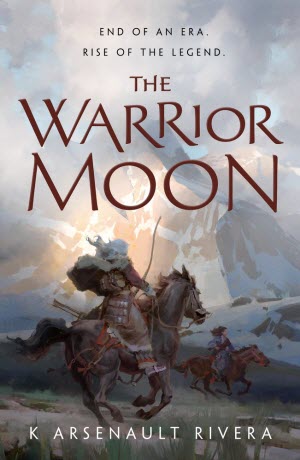 This book is the third and final instalment in what has become one of my favourite fantasy series of recent times. It began with The Tiger’s Daughter and continued in The Phoenix Empress. In these books K Arsenault Rivera has constructed a fascinating fantasy world based loosely on Japanese, Chinese and Mongolian cultures. She has also given us the most adorable pair of lesbian demon hunters in literature. Barsalai Shefali and Minami Shizuka are beautifully drawn, far from perfect, and passionately in love. As the series has been neatly wrapped up I don’t see how we’ll get more stories about them, and this makes me rather sad.
 Jeanette Winterson’s latest book is a pastiche on Frankenstein, and also very much a science fiction novel. Even if it didn’t have a trans main character, it would deserve a review here. Given that additional fact, I really can’t ignore it.

 In my time I have read rather a lot of academic studies of science fiction, but I don’t think I have read anything that comes close in depth and breadth of analysis as Farah Mendlesohn’s study of Heinlein. I’m by no means an expert on Heinlein myself, but I am seriously impressed with how exhaustive this book is. That does of course make it rather exhausting as well. It is very long, and I can see why Mendlesohn opted for crowdfunded publication rather than cut it down substantially as had been requested by the original publishers. Heinlein had a long career, had a huge influence on the field, and was a very complex person. You need a book like this to do him justice.
 I think I first met Kate Heartfield at the Montréal Worldcon in 2009, but we’d been corresponding before that. She was still working as a journalist and I was delighted to find someone of that ilk who was both a feminist and interested in science fiction. Since then she has become a published author. Her novel, Armed in Her Fashion, was one of the most imaginative and daring fantasy debuts I have seen in a long time. It is set in a version of mediaeval Europe that could come right out of the mind of Hieronymous Bosch, and it features an excellent portrayal of a mediaeval trans man. I am delighted to see that it won the 2019 Prix Aurora for the best SF&F novel from Canada.

 Those of you who follow such developments closely will know that Juliet E. McKenna now has an alter-ego, a seemingly genderless person known as JM Alvey who writes murder mysteries set in Ancient Greece. Juliet has written a bit

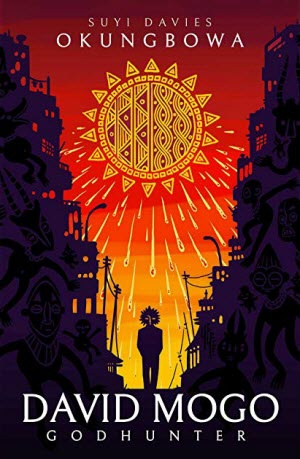 We are in Lagos in the near future, and the gods have fallen to Earth.
